Charter Skipper Credentials: What You Need to Skipper Charter Boats in the UK
You've earned your RYA Yachtmaster. You've logged thousands of sea miles. Now you want to skipper charter boats: whether for a charter company, privately owned yachts, or running your own charter business. Learn the complete credential package charter companies and insurers require.
Published 25 Jan 2026 · 61 views
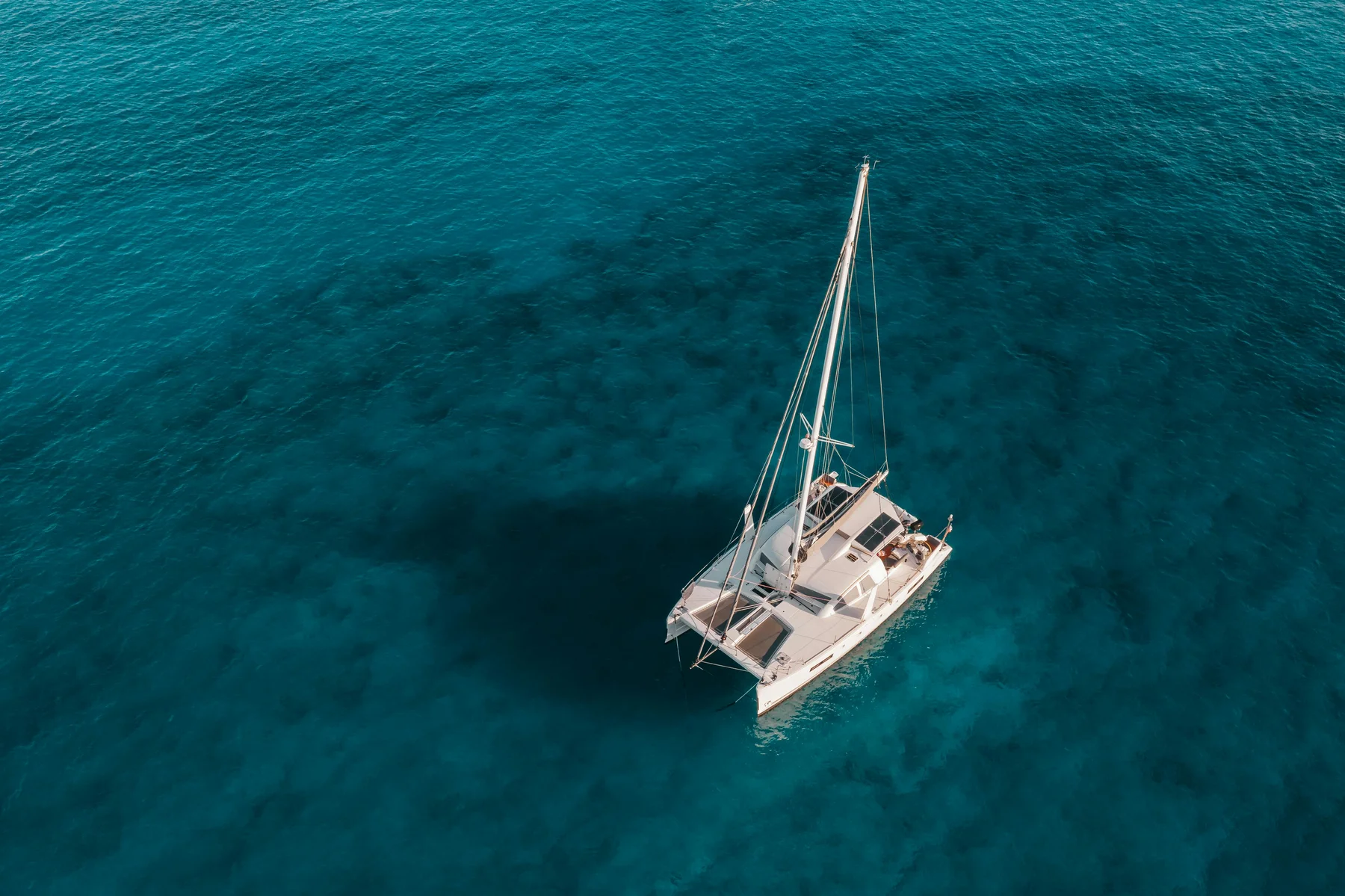
You've earned your RYA Yachtmaster. You've logged thousands of sea miles. You're confident handling a yacht in coastal waters and offshore passages. Now you want to skipper charter boats: whether for a charter company, privately owned yachts, or running your own charter business.
But here's what many sailors discover: having an RYA Yachtmaster certificate isn't enough.
Charter companies and marine insurance providers require a complete credential package that goes far beyond your sailing qualification. Miss one element, and you'll be turned down for positions or face insurance refusal.
This guide breaks down exactly what credentials you need to skipper charter boats in the UK, how to obtain them, and how to verify your credentials to stand out in a competitive market.
Scope Clarification
This guide is about being the skipper in a commercial context: you're being hired or engaged as the skipper for a charter company, flotilla, or owner-operated charter yacht.
If you're just looking to rent a bareboat for a family holiday and be the skipper for your own trip (no paid work involved), the requirements are lighter and mostly come down to ICC / Day Skipper + experience and the charter company's own checklist. See our Bareboat Family Charter guide for full details.
Quick definitions
- Bareboat charter – You rent the boat, there is no professional crew supplied. You (or someone in your party) is the skipper.
- Skippered charter – A professional skipper is supplied with the boat. Guests are effectively passengers.
- Crewed charter – Skipper + additional crew (hostess, engineer, chef, etc.) provided.
This article is focused on the skippered/crewed charter side, where you are the paid skipper and insurers treat you as a commercial operator.
Why Charter Skipper Credentials Matter
Chartering a yacht, whether bareboat (uncrewed) or skippered charter, carries significant legal and financial risk. If something goes wrong (collision, grounding, injury to crew), liability falls on the skipper and the charter company or boat owner.
Marine insurance policies impose strict credential requirements to manage this risk. A charter company can't simply hire anyone with a Yachtmaster certificate. They must prove to their insurer that the skipper meets specific criteria around qualifications, experience, medical fitness, and sometimes even character references.
Key Risk Factors Insurers Assess
- Collision/grounding damage: £50,000-500,000 repair costs for modern charter yachts
- Personal injury claims: Crew injuries can result in £100,000+ liability claims
- Environmental damage: Fuel spills or marine environment damage carry hefty fines
- Salvage costs: Professional salvage for a grounded yacht: £10,000-50,000+
- Loss of earnings: If the yacht is out of commission, the charter company loses revenue
To mitigate these risks, insurers require charter skippers to hold verified credentials proving they're competent, experienced, medically fit, and low-risk.
Core Charter Skipper Credentials Required
1. RYA Yachtmaster Coastal or Higher
Minimum qualification: RYA Yachtmaster Coastal Preferred qualification: RYA Yachtmaster Offshore Gold standard: RYA Yachtmaster Ocean
Why Yachtmaster specifically?
RYA Yachtmaster is an examined qualification, not just course completion. Unlike Day Skipper or Coastal Skipper (which are course certificates), Yachtmaster requires passing an independent examination covering:
- Navigation and pilotage
- Meteorology
- Collision regulations
- Safety and emergency procedures
- Boat handling under sail and power
- Night sailing and passage planning
Coastal vs Offshore for charter:
- Coastal Yachtmaster: Suitable for coastal charter (up to 20 miles from safe haven)
- Offshore Yachtmaster: Required for longer passages and most Mediterranean charter
- Ocean Yachtmaster: Advantageous for Caribbean, Pacific, or trans-ocean charter
Most UK charter companies require minimum Offshore Yachtmaster for Mediterranean flotilla work and bareboat charter.
How to Verify
See our RYA Qualification Verification guide for the verification process.
2. MCA Commercial Endorsement (For Paid Charter)
If you're being paid to skipper (even indirectly: free berth in exchange for skippering counts), you legally need an MCA Commercial Endorsement.
What it is:
An endorsement added to your RYA Yachtmaster certificate by the Maritime and Coastguard Agency (MCA) that permits commercial use. Without it, you're only qualified for private recreational sailing.
Commercial Endorsement requirements:
- Hold RYA Yachtmaster Coastal, Offshore, or Ocean
- Complete 2,500 logged miles (including 50 days as skipper, 2 passages over 60 miles)
- Hold valid MCA-approved medical certificate (ML5 or ENG1)
- Complete approved sea survival course (MCA or STCW)
Processing time: 4-6 weeks after submitting application to MCA Cost: £40 application fee (payable to RYA) Validity: 5 years (renewable)
Important
Even if you're not directly paid (e.g., skippering a friend's yacht for expenses only), if there's any commercial element (advertising, charter company involvement), you need Commercial Endorsement to comply with UK law.
3. Valid ENG1 Medical Certificate
What it is:
An ENG1 is an MCA-approved medical fitness certificate required for all commercial seafarers, including charter skippers with Commercial Endorsement.
Medical examination includes:
- Vision test (unaided and corrected vision standards)
- Hearing test
- Cardiovascular fitness
- Physical examination
- Urine test (diabetes screening)
- Medical history review (chronic conditions, medications)
Cost: £80-120 (varies by doctor) Validity: 2 years (may be shortened at doctor's discretion for those aged 65 and above) Renewal: Book appointment 4-6 weeks before expiry to avoid gaps in certification
4. Sea Miles Evidence (Logbook)
Charter companies and insurance providers require proof of sea miles beyond your Yachtmaster qualifying miles.
Typical experience requirements:
- Coastal charter: Minimum 1,000 logged miles + 20 days as skipper
- Offshore charter (Mediterranean): Minimum 2,500 logged miles + 50 days as skipper
- Ocean charter (Caribbean, Pacific): Minimum 5,000 logged miles including offshore passages
What charter companies assess in logbooks:
- Variety of conditions: Coastal, offshore, night sailing, poor weather
- Recent experience: Miles logged in last 2 years (ancient logbook entries matter less)
- Skipper vs crew: Miles where you were skipper carry more weight
- Boat type familiarity: Miles on similar-sized yachts to charter fleet
- Geographic familiarity: Local knowledge of charter area is valuable
Verification Challenge
Self-reported logbooks are difficult to verify. See Verified Sailing CV guide for how Crew the Boat addresses logbook verification.
Check If You Meet Charter Requirements
Use our free RYA Miles Calculator to verify you have the qualifying miles needed for charter skipper positions. Instant calculation for Day Skipper, Coastal Skipper, and Yachtmaster Offshore requirements.
5. VHF Radio Operator Certificate (SRC/LRC)
Required: Short Range Certificate (SRC) minimum Preferred: Long Range Certificate (LRC) for offshore/ocean charter
What it is:
Licence to operate marine VHF and DSC (Digital Selective Calling) radio equipment. Legally required for any vessel with VHF radio installed (which includes all charter yachts).
Cost: £60-100 Validity: Lifetime (no renewal required)
Why it matters: Charter companies face prosecution if skippers operate VHF without valid certificate. Insurance policies often explicitly require SRC/LRC.
6. First Aid Certificate
Required: RYA First Aid at Sea or equivalent
Why required:
As skipper, you're responsible for crew welfare. First aid training covers:
- CPR and defibrillator use
- Bleeding and shock management
- Burns and scalds
- Fractures and dislocations
- Hypothermia
- Seasickness and dehydration
- Maritime-specific emergencies (man overboard, crush injuries)
Cost: £80-150 Validity: 3 years (must renew before expiry)
7. Character References
Charter companies typically request 2-3 character references, at least one from a sailing context:
Acceptable referees:
- Previous employers (charter companies, sailing schools)
- RYA instructors who know your sailing competence
- Yacht club commodores or sailing club officers
- Boat owners you've skippered for previously
What references should cover:
- Sailing competence and safety awareness
- Reliability and professionalism
- Interpersonal skills (important for charter where you're hosting guests)
- Problem-solving ability in challenging conditions

How to Build Your Charter Skipper Credential Package
If you're working toward charter skipper credentials, here's the recommended progression:
Phase 1: Foundation (6-12 Months)
Goal: Obtain core RYA qualifications
- RYA Day Skipper Theory (online or classroom, 40 hours) - Cost: £200-300
- RYA Day Skipper Practical (5-day course) - Cost: £600-800
- Build sea miles (target: 800 miles, 12 days as skipper)
- RYA Coastal Skipper (5-day course) - Cost: £700-900
Phase 1 total cost: £1,500-2,000
Phase 2: Yachtmaster Qualification (12-18 Months)
Goal: Meet Yachtmaster Offshore qualifying criteria and pass exam
- Build qualifying miles: 2,500 miles total
- 5 passages over 60 miles
- 2 overnight passages
- 50 days as skipper
- RYA Yachtmaster Offshore Exam - Cost: £300-400
Phase 2 total cost: £700-1,000 (plus sailing expenses)
Phase 3: Commercial Credentials (2-3 Months)
Goal: Obtain MCA Commercial Endorsement and supporting certificates
- MCA-Approved Sea Survival Course (1 day) - £150-200
- VHF SRC (1 day) - £60-100
- First Aid at Sea (1 day) - £80-150
- ENG1 Medical (2-hour appointment) - £80-120
- MCA Commercial Endorsement Application - £40
Phase 3 total cost: £400-600
Total Investment to Charter-Ready
Qualification costs: £2,500-3,500 Time investment: 2-3 years from beginner to charter skipper Offset: Paid flotilla work typically recovers £5,000-10,000, offsetting earlier costs.
Verified Charter Skipper Credentials
Having all the credentials isn't enough if you can't prove them to charter companies quickly and reliably. Crew the Boat's verification system streamlines the process: upload credentials once, get verified, and share your verified profile with charter companies instantly. Faster applications, higher response rates, and credential tracking with expiry reminders.
Join Crew the Boat
Build your credentials. Show charter companies what you can do.
How Crew the Boat Streamlines Charter Credentials
Traditional credential verification is painful: photocopying 15+ documents, chasing references, manual logbook summaries, and repeating the process for every charter company.
Single verified profile approach:
- Upload all credentials once: RYA Yachtmaster, MCA Commercial Endorsement, ENG1, VHF SRC/LRC, First Aid, Sea Survival
- Request verification: We verify documents and contact issuing bodies
- Share verified profile: Send your profile URL in applications - no repeated photocopying
Benefits for charter skippers:
- Faster applications: 15 minutes vs 2-3 hours per charter company
- Higher response rate: Verified credentials signal professionalism
- Credential tracking: Expiry reminders for ENG1, First Aid renewals
Benefits for charter companies:
- Reduced vetting time: 15 minutes vs 2-3 hours per skipper
- Insurance compliance: Verified documentation ready for insurers
- Lower risk: Third-party verification reduces fraud risk
Common Charter Credential Questions
Can I charter yachts with RYA Coastal Skipper instead of Yachtmaster?
No. Coastal Skipper is a course certificate, not an examined qualification. Charter companies and insurance require minimum Yachtmaster Coastal (examined). Some companies may accept ICC (International Certificate of Competence), but Yachtmaster is UK standard.
Do I need Commercial Endorsement if I'm not paid directly?
If there's any commercial element (charter company involvement, advertising, payment in kind like free berth), yes. MCA interprets "commercial" broadly. Private sailing with friends sharing costs doesn't require Commercial Endorsement, but formal charter does.
How long does it take to get MCA Commercial Endorsement?
4-6 weeks after submitting complete application. Ensure you have all supporting documents ready: Yachtmaster certificate, logbook evidence of 2,500 miles, sea survival certificate, ENG1 medical. Incomplete applications delay processing significantly.
What if my ENG1 expires during charter season?
You cannot legally skipper commercially with expired ENG1. Book renewal appointment 4-6 weeks before expiry. If you're mid-season abroad, some MCA-approved doctors practice in Mediterranean charter areas (Malta, Gibraltar) for renewals.
Do I need separate qualifications for catamaran charter?
Yes. Insurance requires catamaran-specific experience. Most companies require minimum 3 days logged catamaran time or RYA Catamaran Endorsement course (5 days). Handling differs significantly from monohull (no heeling, different manoeuvrability).
Related Guides
- Bareboat Family Charter Qualifications - Requirements for family sailing holidays (non-commercial)
- RYA Qualification Verification: How It Works - Verify your RYA certificates
- Verified Sailing CV: Why Credential Verification Matters - Overview of credential verification
- Professional Sailing CV Guide - Build a complete maritime CV
- Track RYA Qualifying Miles Online - Digital logbook for Yachtmaster miles
Start Building Your Charter Skipper Credentials
Whether you're starting your RYA journey or already Yachtmaster-qualified and ready for charter work, having verified credentials accelerates your career. Create your verified sailing profile and track your progression toward charter credentials.
Join Crew the Boat
Build your credentials. Show charter companies what you can do.